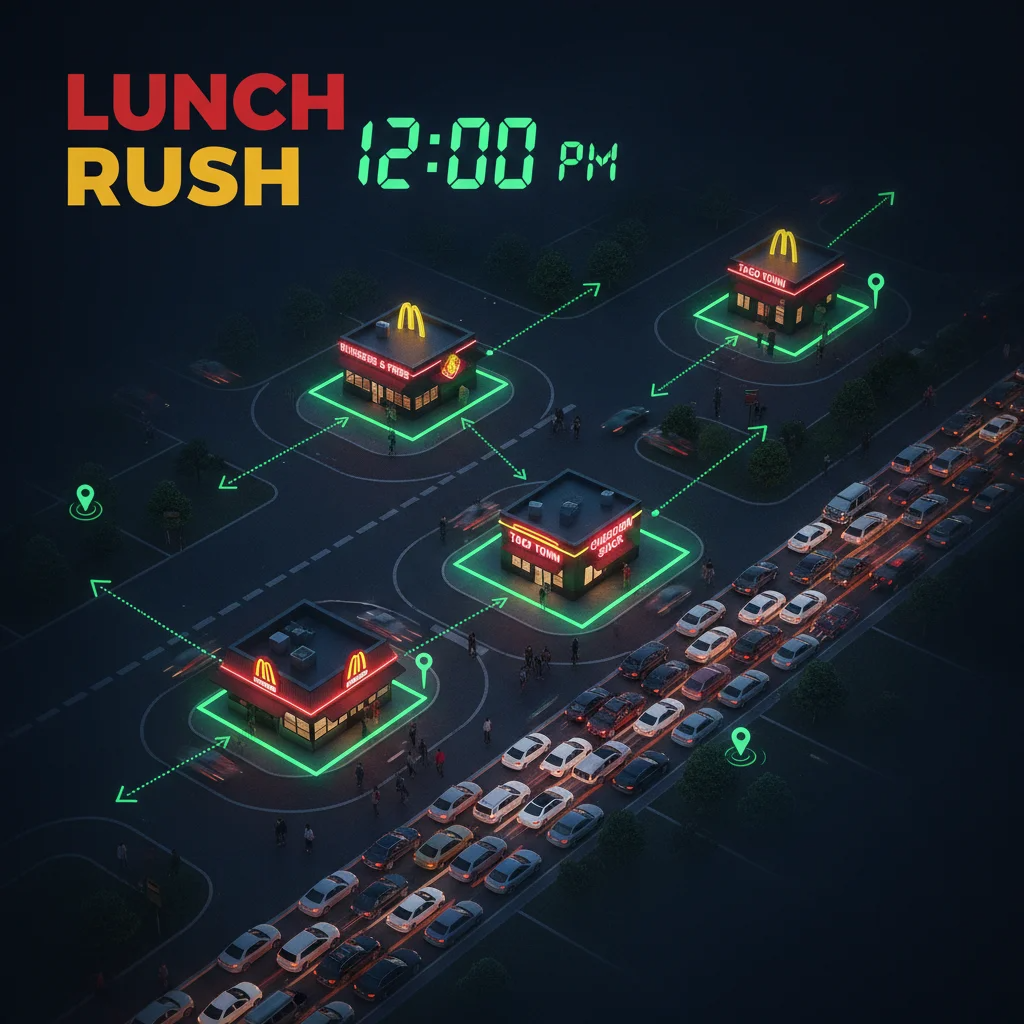

In today’s competitive marketplace, small businesses are constantly looking for smarter, more cost-effective ways to reach their ideal customers. Geofencing has emerged as one of the most powerful and accessible tools in modern digital advertising, allowing even the smallest businesses to compete with larger brands by targeting customers in real time based on their physical location.
Whether you run a local coffee shop, a boutique retail store, a dental practice, or a home services company, geofencing gives you the ability to deliver hyper-targeted ads to people who are already near your business — or near your competitors. In this guide, we’ll break down five proven geofencing secrets that small businesses are using right now to drive foot traffic, increase conversions, and maximize their advertising ROI.
Article Outline
- What Is Geofencing and How Does It Work?
- Secret #1: Target Your Competitors’ Locations With Geofencing
- Secret #2: Use Geofencing to Re-Engage Past Visitors
- Secret #3: Layer Geofencing With Behavioral Data for Precision Targeting
- Secret #4: Time Your Geofencing Campaigns Around Local Events
- Secret #5: Measure Walk-In Conversions With Geofencing Attribution
- Geofencing Best Practices for Small Business Success
- Common Geofencing Mistakes Small Businesses Must Avoid
- Top Geofencing Tools and Platforms for Small Businesses
- Final Thoughts: Why Geofencing Is a Game-Changer for Small Businesses
What Is Geofencing and How Does It Work?
Geofencing is a location-based digital marketing strategy that creates a virtual boundary — or “fence” — around a specific geographic area. When a mobile device enters or exits that boundary, it triggers a targeted advertisement, push notification, or marketing message. The technology relies on a combination of GPS, Wi-Fi, Bluetooth, and cellular data to detect a device’s location with impressive accuracy.
For small businesses, this means you can draw a virtual perimeter around your store, your competitor’s location, a local event venue, or even a specific neighborhood. Any potential customer who walks into that digital boundary with a smartphone can then be shown your ad — whether they’re browsing social media, reading the news, or using an app.
Here’s a simplified breakdown of how the geofencing process works:
- Define the geographic zone: You choose the location and size of your geofence — it could be as small as a single building or as large as an entire zip code.
- Set campaign triggers: You determine what happens when someone enters or exits the fence — such as showing a display ad, sending a push notification, or adding them to a retargeting list.
- Deliver targeted messages: Your ads are shown to users on their mobile devices through ad networks, apps, or social platforms.
- Track results: You monitor impressions, clicks, and — most importantly — foot traffic and in-store visits driven by the campaign.
The beauty of geofencing for small businesses is that it removes a lot of the guesswork from advertising. Instead of broadcasting your message to everyone in a city, you’re reaching people who are already in the right place at the right time — making every advertising dollar work harder.
Secret #1: Target Your Competitors’ Locations With Geofencing
One of the most powerful and underutilized geofencing secrets is competitive conquesting — the practice of setting up a geofence around your competitors’ locations. When a potential customer walks into a rival business, you can serve them an ad that showcases your unique value proposition, a special offer, or a compelling reason to choose you instead.
This tactic works exceptionally well for businesses in highly competitive niches such as:
- Auto dealerships
- Dental and medical clinics
- Fast food and restaurants
- Gyms and fitness studios
- Retail and fashion stores
- Real estate agencies
Imagine you own a local gym. You can place a geofence around three or four competing gyms in your area. When someone enters one of those gyms — perhaps a person who is unhappy with their current membership — your ad appears on their phone offering a free trial or a discounted membership. This is reaching customers at the perfect moment of consideration.
To make competitive conquesting work effectively, keep these tips in mind:
- Be specific with your offer: A generic ad won’t cut it. Give people a compelling reason to switch — a discount, a free consultation, a unique service they can’t get elsewhere.
- Keep the fence tight: Don’t make your geofence too large. A precise boundary around the competitor’s actual building ensures you’re reaching relevant customers, not passersby.
- Use strong creative: Your ad visuals and copy need to stand out. Highlight what makes your business better, faster, cheaper, or more personal.
This technique puts you directly in front of your competitors’ customers — a level of strategic advertising precision that was once only available to enterprise-level brands with massive marketing budgets.
Secret #2: Use Geofencing to Re-Engage Past Visitors
Retargeting past visitors is one of the highest-ROI activities in digital marketing. Geofencing makes this even more powerful by allowing you to retarget people based on where they physically went — not just where they clicked online. This strategy is known as geo-retargeting or visit-based retargeting.
Here’s how it works: when someone visits your business location (or any location you’ve geofenced), their device ID is captured and added to a custom audience segment. You can then continue serving them targeted ads for days, weeks, or even months after their visit — reminding them to come back, promoting a new product, or offering an exclusive loyalty discount. – Mastering the Art of Media Buying: Proven Strategies, Tips, and Techniques for Successful Online Advertising Campaigns
This strategy is incredibly effective because:
- People who have already visited your location are far more likely to convert than cold audiences
- It keeps your brand top of mind between visits
- You can personalize the message based on what they might have been interested in during their visit
- It dramatically increases customer lifetime value and repeat business
For example, a spa or salon can retarget clients who visited 6–8 weeks ago — right around the time they’d be due for their next appointment — with a gentle reminder and a small discount. This kind of timely, relevant marketing feels helpful rather than intrusive, and it produces measurable results.
Secret #3: Layer Geofencing With Behavioral Data for Precision Targeting
On its own, geofencing is already a powerful tool. But when you layer it with behavioral and demographic data, it becomes an incredibly precise targeting machine. This is one of the best-kept geofencing secrets among top-performing media buyers.
Most advanced geofencing platforms allow you to add additional filters on top of location data. This means you’re not just targeting everyone who passes through a geofenced area — you’re targeting the right people within that area. (Learn more about geofencing)
Here are the types of data layers you can combine with geofencing:
- Age and gender demographics: Target only the age groups most likely to buy from you
- Income levels: Ideal for luxury brands, high-end services, or budget-focused businesses
- Purchase intent signals: Target people who have shown interest in your product category
- Interests and hobbies: Combine location with lifestyle data for a sharper audience profile
- Device type: iOS vs. Android targeting can sometimes reflect demographic differences
- Frequency of visits: Target habitual visitors to certain locations who show consistent behavioral patterns
For instance, a children’s clothing boutique might geofence a nearby playground, school, or family-friendly restaurant — and then layer on a demographic filter targeting women aged 28–45 with household incomes above a certain threshold. The result is a highly refined audience that is far more likely to be interested in what the store offers.
This multi-layered approach reduces wasted ad spend and dramatically improves your click-through rates and conversion rates — two metrics that directly impact your bottom line.
Secret #4: Time Your Geofencing Campaigns Around Local Events
Event-based geofencing is one of the most creative and effective ways for small businesses to capitalize on high-traffic moments in their community. The idea is simple: identify local events that draw large crowds of your ideal customers, geofence those venues, and run targeted campaigns before, during, and after the event.
Think about what kinds of events attract your ideal audience:
- Farmers markets and street fairs
- Sports events, marathons, or tournaments
- Concerts and music festivals
- Home and garden expos
- College orientation and graduation events
- Business conferences and trade shows
- Community festivals and parades
A local restaurant, for example, could geofence a nearby concert venue during a major event weekend and serve ads to attendees before the show with a message like: “Looking for dinner before the concert? We’re just 2 blocks away — reserve your table now.” This kind of contextually aware advertising connects with people at exactly the right moment.
The timing of your geofencing campaign matters a great deal for event-based targeting:
- Pre-event: Build awareness and drive planning behavior (reservations, bookings)
- During the event: Capture spontaneous decision-makers who need immediate solutions
- Post-event: Retarget attendees with follow-up offers and reminders
Event-based geofencing is also a smart way to build your audience list for future campaigns. Even if attendees don’t convert immediately, you’ve added them to a retargeting pool of highly relevant prospects.
Secret #5: Measure Walk-In Conversions With Geofencing Attribution
One of the most significant challenges for local businesses has always been proving that digital advertising actually drives physical store visits. This is where geofencing attribution becomes a game-changer. Modern geofencing platforms can now measure and report on actual foot traffic driven by your campaigns. – The Ultimate Guide to Media Buying: Strategies, Tips, and Best Practices for Successful Advertising Campaigns
Here’s how geofencing conversion tracking works:
- You run a geofencing campaign targeting a specific audience
- A conversion zone is set up around your own business location
- When a user who was served your ad later walks into your store (enters the conversion zone), that visit is recorded as a walk-in conversion
- You receive detailed reports showing how many ad viewers physically visited your location
This data is enormously valuable for small businesses because it provides clear proof of campaign effectiveness and allows you to calculate your true cost per store visit. You can use this insight to:
- Compare the performance of different geofencing zones or creative strategies
- Calculate cost-per-visit and cost-per-acquisition with real accuracy
- Justify your marketing budget and demonstrate ROI to stakeholders or business partners
- Optimize future campaigns based on what’s actually driving foot traffic
For small businesses operating with tight budgets, this level of transparency and accountability is transformative. It shifts geofencing from a “trust the process” activity to a data-driven, measurable marketing investment.
Geofencing Best Practices for Small Business Success
To get the most out of your geofencing campaigns, it’s essential to follow proven best practices. Here’s what separates high-performing geofencing campaigns from mediocre ones: (Learn more about geofencing)
Set the Right Fence Size
The size of your geofence directly impacts its effectiveness. Too large, and you’re wasting impressions on irrelevant audiences. Too small, and you’re missing potential customers. As a general rule:
- Urban areas: 1–3 city blocks or a radius of 0.1 to 0.3 miles
- Suburban areas: A radius of 0.5 to 1 mile
- Large venues or events: Match the fence to the actual perimeter of the venue
Craft Compelling Ad Creative
Your ad creative needs to be clear, visually engaging, and action-oriented. For geofencing ads specifically, shorter messages work better because users are often on the go. Focus on:
- A strong, single-minded headline
- A clear call-to-action (CTA) like “Visit Us Today,” “Claim Your Offer,” or “Book Now”
- Location references that make the ad feel relevant (“Just 5 minutes away!”)
- A sense of urgency or exclusivity when appropriate
Choose the Right Time Windows
Day-parting — running your ads only during specific hours — can significantly improve your geofencing campaign performance. A breakfast café, for example, should run ads during the morning commute window. A bar or entertainment venue might focus on Friday and Saturday evenings. Match your ad schedule to when your target customers are most likely to be in your geofenced area and ready to act.
Test and Optimize Continuously
Like any digital marketing strategy, geofencing requires ongoing testing and optimization. Run A/B tests on your ad creative, CTAs, and fence sizes. Monitor your metrics weekly and be prepared to make adjustments. The businesses that win with geofencing are those that treat it as an ongoing process, not a one-time campaign.
Common Geofencing Mistakes Small Businesses Must Avoid
Even with a solid strategy, certain mistakes can undermine your geofencing efforts. Being aware of these pitfalls in advance can save you time, money, and frustration.
- Making the geofence too large: This dilutes your targeting precision and wastes your budget on unqualified audiences
- Ignoring mobile ad creative requirements: Geofencing is a mobile-first strategy — ads not optimized for mobile will underperform
- Not setting up conversion zones: Without a conversion zone, you’re flying blind and can’t measure ROI accurately
- Running campaigns without a clear offer: Vague ads that don’t give the user a compelling reason to act will be ignored
- Setting and forgetting: Geofencing campaigns need regular attention, monitoring, and optimization
- Targeting irrelevant locations: Always ensure your geofenced locations are actually frequented by your ideal customers
- Neglecting frequency caps: Showing your ad too many times to the same person can lead to ad fatigue and negative brand perception
Top Geofencing Tools and Platforms for Small Businesses
Choosing the right platform is crucial to running a successful geofencing campaign. Here are some of the most popular and small-business-friendly geofencing tools available today:
- GroundTruth (formerly xAd): One of the leading location-based advertising platforms with robust geofencing capabilities and walk-in attribution tracking
- Simpli.fi: A programmatic advertising platform widely used by agencies and local businesses for geo-targeted campaigns
- Google Ads with Location Targeting: While not traditional geofencing, Google’s radius targeting and local ad formats offer accessible entry-level location targeting
- Facebook & Instagram Ads: Meta’s location targeting tools allow businesses to target users within a specific radius of their business or any location
- Propellant.media: A specialized geofencing platform known for its addressable geofencing and conversion tracking features
- Reveal Mobile: Offers self-serve geofencing with audience building and attribution tools suited for small and mid-sized businesses
When evaluating platforms, consider factors like minimum budget requirements, ease of use, reporting capabilities, and the quality of their location data. Many platforms offer managed service options, which can be beneficial for businesses that are new to geofencing and want expert guidance.
Final Thoughts: Why Geofencing Is a Game-Changer for Small Businesses
The era of spray-and-pray advertising is over. Today’s most successful small businesses are investing in smart, targeted, and measurable marketing strategies — and geofencing sits at the top of that list. By creating virtual boundaries around the locations that matter most to your business, you can deliver the right message to the right person at exactly the right moment.
Let’s recap the five proven geofencing secrets that small businesses are using to win:
- Target competitors’ locations to reach customers who are already in the consideration phase
- Re-engage past visitors with geo-retargeting campaigns that drive repeat business
- Layer geofencing with behavioral data to create hyper-precise audience segments
- Capitalize on local events with timely, contextually relevant campaigns
- Measure walk-in conversions to prove ROI and optimize your strategy
The best part? Geofencing is no longer reserved for big brands with massive budgets. With the variety of platforms available today and the scalability of most geofencing solutions, even a business spending a few hundred dollars per month can see meaningful results. The key is to start with a clear strategy, use the secrets outlined in this guide, and commit to ongoing optimization.
Whether you’re just getting started with location-based advertising or looking to take your existing campaigns to the next level, geofencing offers a powerful, data-driven path to growth. Start small, test often, measure everything — and watch your foot traffic and conversions grow.
If you’re ready to explore how geofencing can work for your specific business, consider partnering with a digital media buying agency that specializes in local and location-based advertising. With the right strategy and execution, geofencing can become one of the most valuable tools in your marketing toolkit.